Are you still leaning on flipbooks like it’s 2005?
Many magazine publishers are stuck in a traditional mindset, relying on old models that no longer work. I interview Wally Wallace from 50fish who has helped magazine publishers grow subscriptions for almost a decade.
So, how do you build a sustainable business when the very foundation of your industry is changing?
The solution, according to digital agency expert Wally Wallace of 50Fish, isn’t about abandoning the ship. It’s about a fundamental shift in mindset and strategy. The key is to stop thinking like a publisher of physical content and start acting like a savvy e-commerce business.
This means focusing on quality, building a premium digital experience, and creating a direct-to-reader conversion funnel.
From Print Pages to Premium Product
Your content is your most valuable asset, and it’s time to treat it that way. The first step in this digital transformation is to present your work as a premium product. This goes beyond the words themselves; it’s about the entire user experience.
For Small Boats Magazine, a redesign can make all the difference. Their website moved away from a dated layout to a clean, modern design with ample white space and clear navigation.

This wasn’t just a cosmetic change; it was a strategic move to signal the value of their content. When visitors land on the site, they immediately feel that this is a high-quality product worth paying for.
For a publisher, this means investing in a great user experience that makes your content easy to read and beautiful to look at. A confident, premium feel builds trust and sets the stage for a sale.
Looking to grow your publication?
Sign up for expert advice straight to your inbox.The Anatomy of a High-Converting Funnel
The goal is to turn curious visitors into paying subscribers, and the most effective way to do this is with a well-designed funnel. The Small Boats strategy offers a perfect blueprint.
1. Attract Readers with Evergreen Content: Don’t let your archive of great articles collect digital dust. Use it as a powerful marketing tool. Evergreen content, like their popular article on the “unsinkable” Boston Whaler, can be a magnet for organic search traffic.
2. Leverage Pinterest as a Visual Search Engine: Wally notes that platforms like Pinterest can be a goldmine, too. By treating it as a visual search engine and optimizing images with keywords, Small Boats earned 21 subscriptions from Pinterest in a single month.

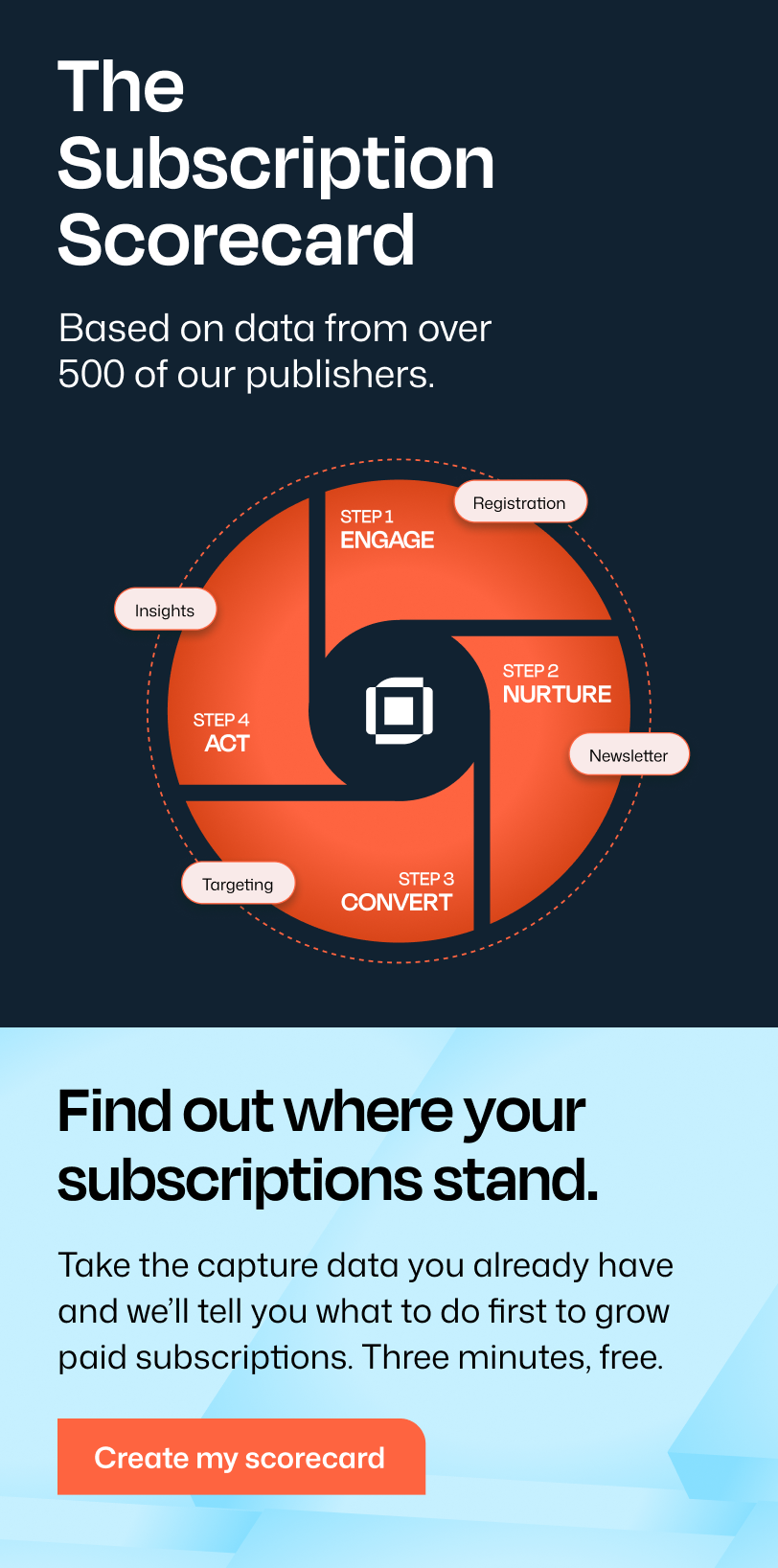
Capture Emails with a “Free Registration Wall”: Once a visitor lands on an article, don’t just give it away. Implement a “free registration wall.” This prompts users to provide their email to read the full article. It’s a simple, confident move that establishes the value of your content while capturing valuable leads.

Nurture and Convert with your Email Newsletter: Once you have a reader’s email, the real work begins. An automated welcome series is crucial. For Small Boats, a three-email series over eight days helps nurture the relationship, showcase the brand’s value, and present a clear offer to subscribe. This strategy is incredibly effective, especially for publishers who have traditionally sent only one email per month.
As Wally puts it, your email becomes your product, and sending more frequently (at least twice a week) can lead to higher open rates and conversions. You can even use your weekly emails to re-share curated content from your archives, giving new readers a chance to discover your best work.
Finding Your True North: From Ads to Subscriptions

For many publishers, transitioning from an ad-centric model to a subscription model is a challenging task. It requires a shift in priorities and a willingness to step away from old habits. The subscription game is about quality over quantity, and it demands that you believe in the premium value of your content.
This doesn’t mean you have to abandon advertising completely. It means being more strategic about it. Instead of intrusive ad popups, consider integrated sponsorships that are a natural part of your site’s design. This maintains a clean user experience while providing an additional revenue stream.
By focusing on building a premium digital product, creating a strong conversion funnel, and leveraging your content archives, you can chart a new, more profitable course. The pain of transition is real, but the reward is a sustainable business model built on the loyalty of your most engaged readers.
What steps is your publication taking to transition to a subscription model?
Let’s talk paid subscriptions

Want to learn more about growing your audience and converting subscribers with your paywall? Get in touch with Pete.